
sprinkler systems · winter preparation
Winterize your sprinkler system
Protect the plumbing most exposed to freezing, then check whether your buried lines need additional drainage.
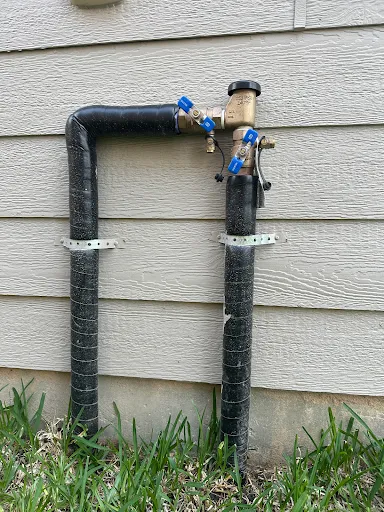
What you need
- A dedicated sprinkler isolation valve
- Installed inlet and outlet drain valves below the backflow preventer
In mild-winter areas, the exposed backflow preventer is usually the most vulnerable part of a sprinkler system. Buried pipe may already be below the local frost depth, but depth and drainage vary by installation.
- Set the sprinkler controller to Off or Rain mode.
- Close the sprinkler system’s main isolation valve. Leave it fully closed all winter.
- Open the inlet and outlet drain valves below the backflow preventer and let the water empty. The two small test cocks alone are not enough.
- Use a flathead screwdriver to open both small test cocks.
- When drainage stops, leave both large ball valves, the test cocks, and the drain valves halfway open at about 45°.
- Insulate exposed pipe without blocking the backflow preventer’s vent or drains.
Do the buried lines need more?
If the system has manual drains at its low points, open them according to its instructions. Automatic drains work only where they were installed, and sprinkler heads with check valves may retain water.
If you cannot identify the drainage design—or your area gets sustained hard freezes—ask a qualified irrigation professional whether the system needs a blowout. Do not use compressed air with this checklist, and never send compressed air through the backflow preventer.
Sources
- Model 765 pressure vacuum breaker draining procedure for freeze protection · FEBCO, accessed July 29, 2026
- Valves — winterization procedures · Hunter Industries, accessed July 29, 2026
- How do I winterize my irrigation system? · Rain Bird, accessed July 29, 2026
- Winterizing outdoor pipes and sprinklers · University of Georgia Cooperative Extension, accessed July 29, 2026