
tree care · tree planting
Plant a tree the right way
Find the root flare, prevent mulch volcanoes, and give new or established trees a healthier start.
Before you start
- Always call 811 before you dig
- If you need tailored advice, find a local ISA Certified Arborist
Are your trees planted right?
I live in a standard Texas developer-made suburb. As you can guess, the goal is to get those houses built quick, and cheap. Anywho, we’re a couple years in, and a post was just made on the neighborhood Facebook group. One of two live oak trees (in the small yards of this neighborhood, mind you) rapidly deteriorated all of a sudden. A quick ChatGPT diagnosis later, and yeup - it was poorly planted. Other folks chimed in they were seeing the same thing. Turns out, when you’re artificially chucking trees in the ground and landscaping on and around them, you need to take a little extra care in how that’s done to have healthy, thriving trees. So…how?
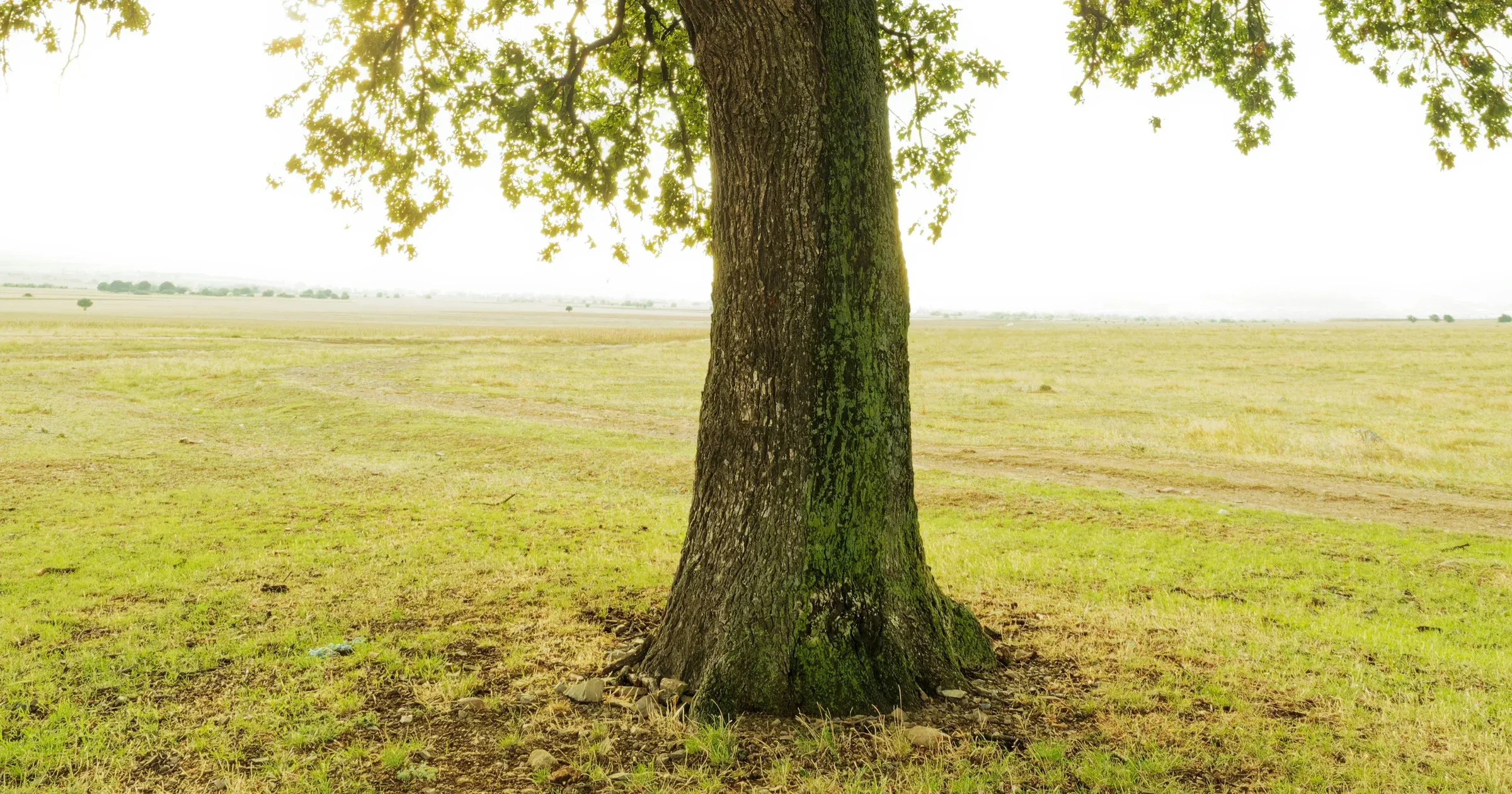
The most common advice I’ve heard over the years, and followed myself on several trees already to great success, is to identify the tree’s root flare and let it breathe. The root flare is essentially right on the base of the trunk where the first major roots start to fan out. To find it on an already planted tree, you might have to dig down a couple inches (yikes). The root flare needs to be exposed for two main reasons: first, the roots need oxygen (specifically, the amount they expect to get when lightly buried versus buried deeply and super compacted), and second, trees, and especially their bark, hate excess moisture. Having any part of the trunk buried lets wet soil touch the bark, bringing with it rot, disease, and pests, as well as allowing roots to grow around and effectively strangle it.
Excess moisture - let the words ring in your ears, because the second and final main piece of advice is: don’t mulch, or at least heavily, within a few inches of the trunk. One of mulch’s jobs is to trap moisture, and that’s not great for the tree for the reasons mentioned above. Mulch donuts, not mulch volcanoes. On that same note, don’t plant tree species that aren’t super well adapted to wetlands in spots that are constantly waterlogged or where water frequently pools.
Alrighty - so you’ve stopped strangling and waterboarding your trees which is a surefire way to dramatically increase an organism’s survivability in general. Here’s some pretty good lesser-known advice if you’re newly planting a tree and really want to give it a good start:
- Dig wide, not deep. The hole should be 2-3x the width of the root ball, and only as deep as.
- Put the original soil back, perhaps a little more broken up and with a light soil amendment if you’re in a clay-heavy area (we love our clay <3).
- Cut or straighten roots that seem to be circling inwards. Don’t overdo it, but you want to increase the chances of more roots growing further out.
- Water it healthily (but don’t keep it soggy) for the first month or so, especially if it’s already getting hotter.
And that’s really it! A couple quick checks and you can give your trees the best chance of growing into their full beauty.
Sources
- Before you dig · Texas 811, accessed August 14, 2026
- Find an arborist · International Society of Arboriculture, accessed August 14, 2026
- New tree planting · International Society of Arboriculture, accessed August 14, 2026
- Planting · Texas A&M Forest Service, accessed August 14, 2026
- Mulching · Texas A&M Forest Service, accessed August 14, 2026
- Trees planted too deeply · University of Maryland Extension, accessed August 14, 2026