
sprinkler systems · lawn care
Ideal sprinkler settings for the Gulf Coast
Water less often but deeper, split runs into multiple cycles, and help heavy clay soil absorb it — irrigation settings for hot Gulf Coast summers.
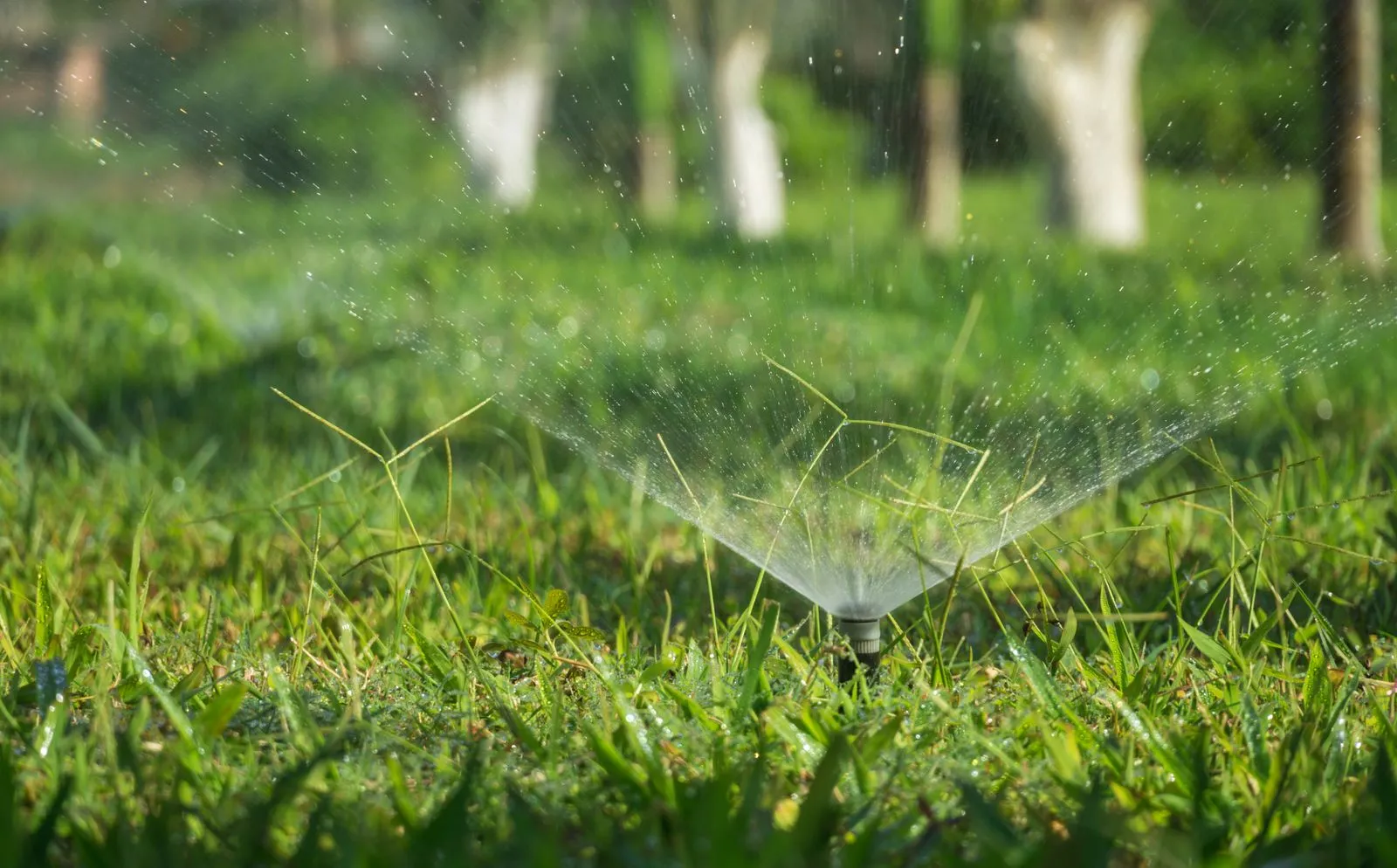
It’s a hot, 110-degree-heat-index August day. You’re staring out at your lawn, wondering why it’s crispier than a county-fair corn dog when you water it a TON and every single day at that. Well, you can’t reasonably beat the Texas late summer heat, but let’s explore the latest and greatest guidance for your irrigation system on the Gulf Coast (POV: Houston).
Why bother? You can get away with using less water and/or getting way further with the same amount, and that’s good for the environment and your wallet. Oh, and of course the nice green lawn.
Overview:
- Water two or three days a week during hot, dry weather, with longer run times for slower rotating heads
- Use multiple start times or cycles to allow the water to soak in better, especially on heavy clay soils
- Soil amendments
Limit your watering to two or three days a week, but with longer run times. One caveat before you touch the controller: a lot of cities and utility districts restrict which days (and hours) you can run irrigation, so check your local jurisdiction’s rules and stay inside them. A lot of plants, St. Augustine grass included, benefit from less frequent deeper watering. This enables the water to soak deeper in the soil (where it’ll also hang around longer and not evaporate as quickly), which will in turn encourage the roots to grow deeper to take advantage of this, leading to a more drought resistant lawn. Why not just water long AND every single day? Well, at that point you’d be drowning your grass, supporting the kids’ mud pie business, and giving the lovely fungi and molds of the region an extremely open invitation.
So what does “longer” actually mean? As a rough starting point, give zones with fixed fan-shaped spray heads about 20 total minutes on each watering day. Give zones with slowly rotating heads about 60 total minutes. Those are totals, not single runs. Full-sun areas may need all three watering days during the hottest, driest stretches, while shaded areas may need less. Skip or cut back after a decent rain, and follow your local watering rules.
Feeling like a scientist? Find some tuna cans or similar, spread ’em across a zone, and run that zone for 15 minutes. See how much water you get (Ex: ¼ inch), then do some math to see how long you need to run that zone to get to a rough target of ½ inch per watering day.
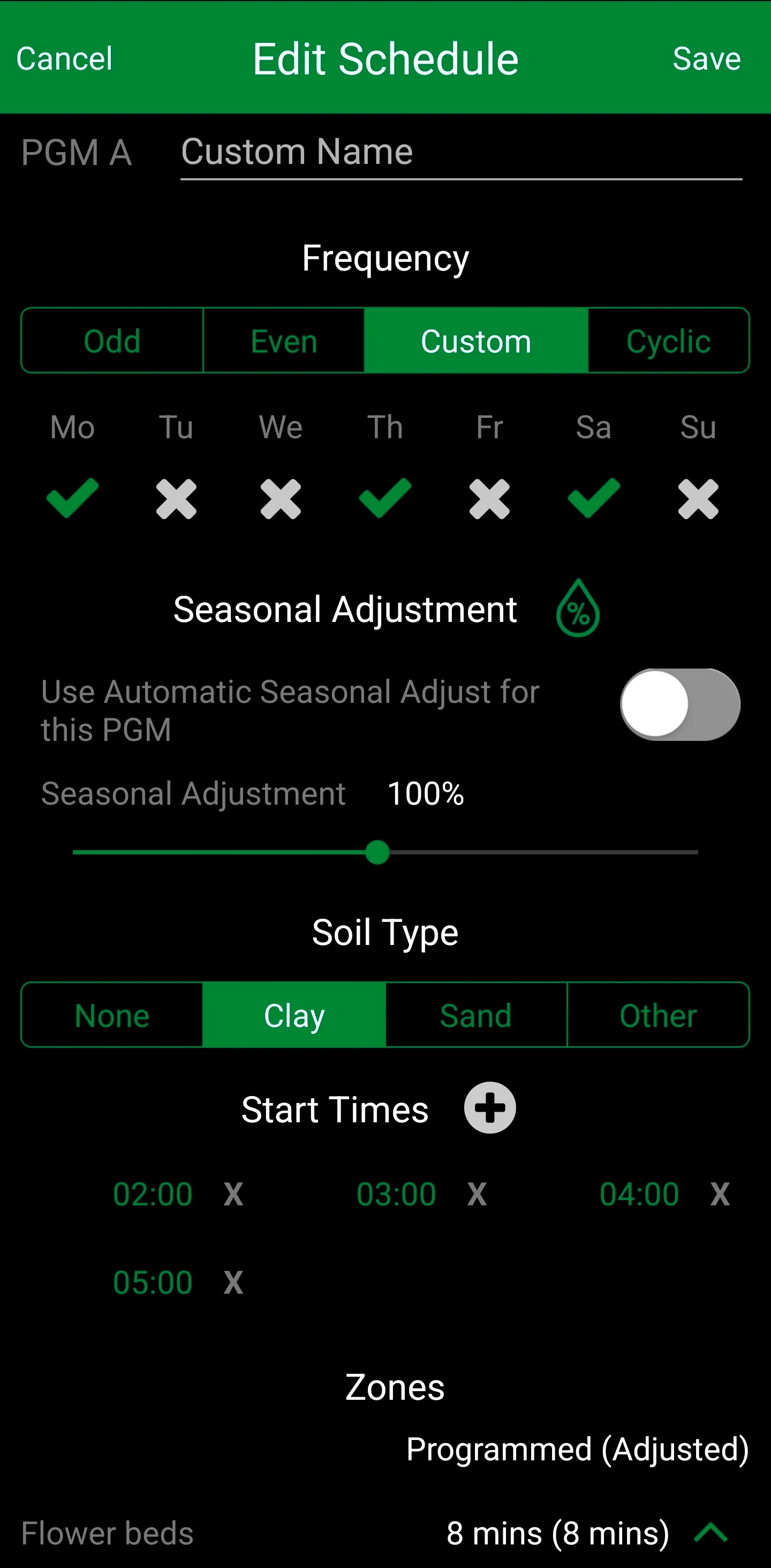
Split that total into multiple cycles / start times. On Gulf Coast clay, try four cycles—about 5 minutes each for fixed spray heads or 15 minutes each for rotating heads—spaced roughly an hour apart. That’s going to give the soil time to absorb the water you’re giving it, which also means less of it just runs right off into the street. Think about it, what’s easier to drink? One of those giant water park buckets, or a water bottle? Setting it up can be a little unintuitive depending on your sprinkler system model and interface, but with the Rain Bird system I have (ESP-TM2), you divide your zone total run times by the amount of start times you want and then configure your start times. I did mine with the program run time for each cycle and the spacing between cycles in mind. Some models/interfaces make this far easier with a “Cycle and soak” or similar option.
Your soil may not be doing you any favors either, and I don’t mean the clay we all know and love (but seriously, that stuff is nutrient packed and a water reservoir). Consider amending the soil with a chemical aerator (such as Liquid Soil Loosener from Simple Lawn Solutions) and a humic acid mixture (such as Humic DG from The Andersons). Fair warning though: the university extension folks are skeptical that liquid aerators do much for compacted clay, and the humic acid research is modest, so treat these as help at the margins rather than a cure. The tried-and-true fix for compacted soil is physical core aeration — pulling actual plugs — so if your yard is really struggling, start there.
So to recap – no more daily watering and just dumping the water on with half of it going right to the street drains! Water less frequently but longer to compensate to train the roots to grow deeper, spread it into multiple cycles on the days it does run for better absorption, and look into improving the soil itself. Save some water, save some money, save the lawn, save your late-summer sanity.
Sources
- St. Augustinegrass lawn management (EHT-144) · Texas A&M AgriLife Extension, accessed July 31, 2026
- Preventing water runoff with cycle and soak irrigation · Texas A&M AgriLife Extension, accessed July 31, 2026
- Irrigation efficiency check · City of Houston, Houston Public Works, accessed August 4, 2026
- When it's hot · EPA WaterSense, accessed July 31, 2026
- ESP-TM2 controller user manual · Rain Bird, accessed July 31, 2026
- MP Rotator brochure · Hunter Industries, accessed August 4, 2026
- RN high efficiency rotary nozzles · Rain Bird, accessed August 4, 2026
- Current watering restrictions · City of Houston, Houston Public Works, accessed July 31, 2026
- Liquid lawn aeration (PlantTalk 1545) · Colorado State University Extension, accessed July 31, 2026
- Liquid vs mechanical lawn aeration · University of Nebraska Extension, via Ask Extension, accessed July 31, 2026
- Influence of humic acid on water retention and nutrient acquisition in simulated golf putting greens · Utah State University (Soil Use and Management), accessed July 31, 2026